
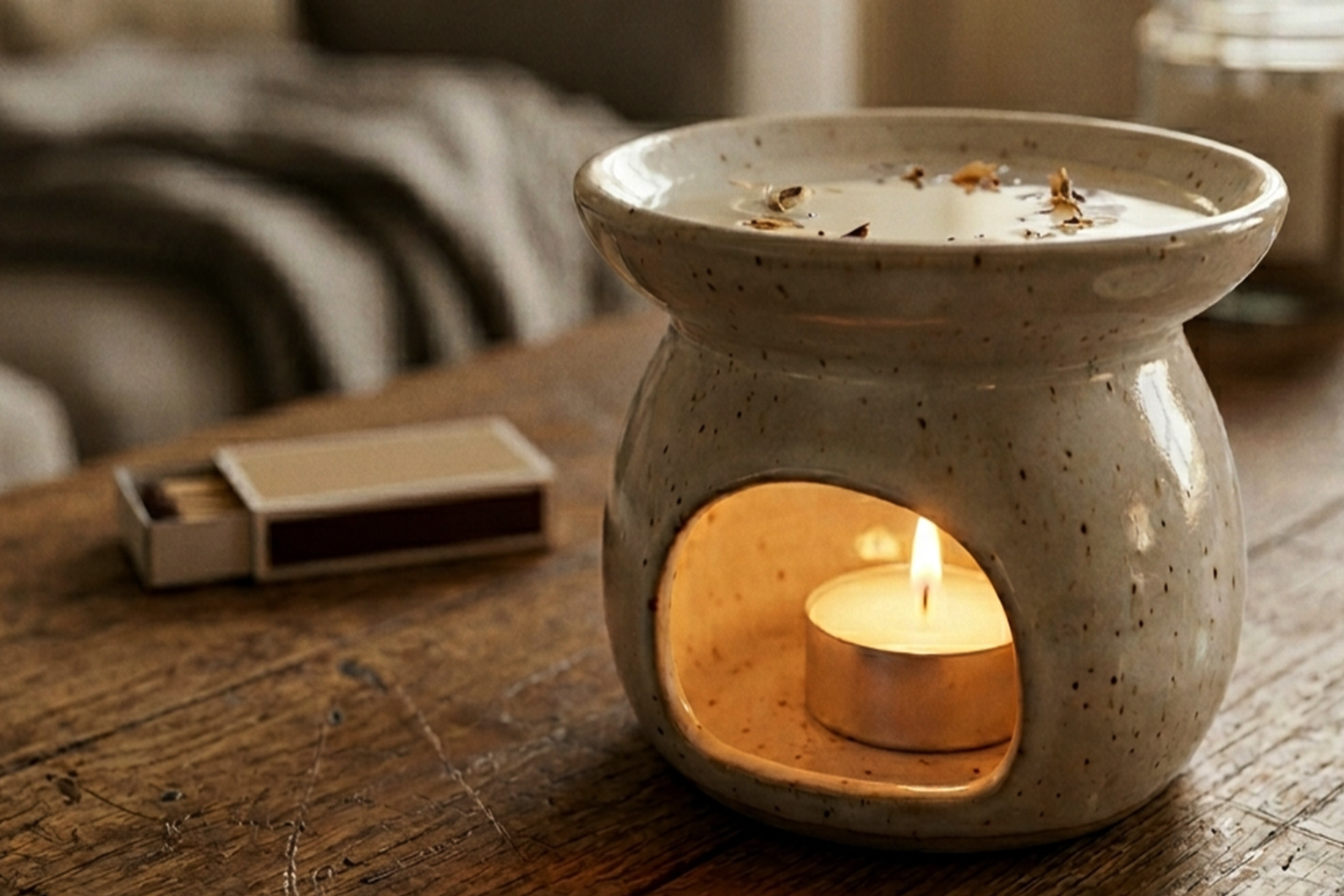
Wax burners crack for a few simple reasons. Most come down to heat, materials and how you use them.
Thermal shock is the main culprit
This is what happens when your burner goes from cold to hot or hot to cold too fast. Think placing a cold burner dish onto a hot candle, or pouring cold wax into a really hot burner. Ceramic and glass expand when heated and shrink when cooled. Do that too quickly and small cracks appear and over time they grow.
Cheap materials make things worse
Budget burners often use thin ceramic or low-quality glaze. These can have tiny flaws or air pockets inside. Each time you heat and cool the burner, those weak spots take a little more stress. Eventually they can crack.
Hot spots cause uneven stress
If your bulb or tealight runs hotter in one area, part of the dish expands more than the rest. That puts strain on the structure. It’s worse in poorly made burners or when you use the wrong wattage bulb or when your tealight is off centre below the dish.
Too much heat weakens the burner over time
Leaving your burner on for hours, or using a bulb that’s too powerful, pushes the ceramic beyond what it can handle. 8 hour tealights in burners suited to only 4 hour tealights can cause the burner to heat up too fast and for far too long. The glaze starts to break down. Cracks follow and sometimes can cause a fire. When too hot you can often hear cracking sounds coming from your burner. It is a warning sign most often that your burner is running too hot and cracking under heat.
How you handle it matters too
Small knocks, wobbly surfaces and rinsing a hot burner under cold water can all cause damage. These seem minor but over time they can add up.
How to make your burner last
- Let it heat up and cool down slowly
- Use the right bulb wattage
- Avoid sudden temperature changes
- Handle it gently
A good quality burner, looked after properly, should last for years without a crack.